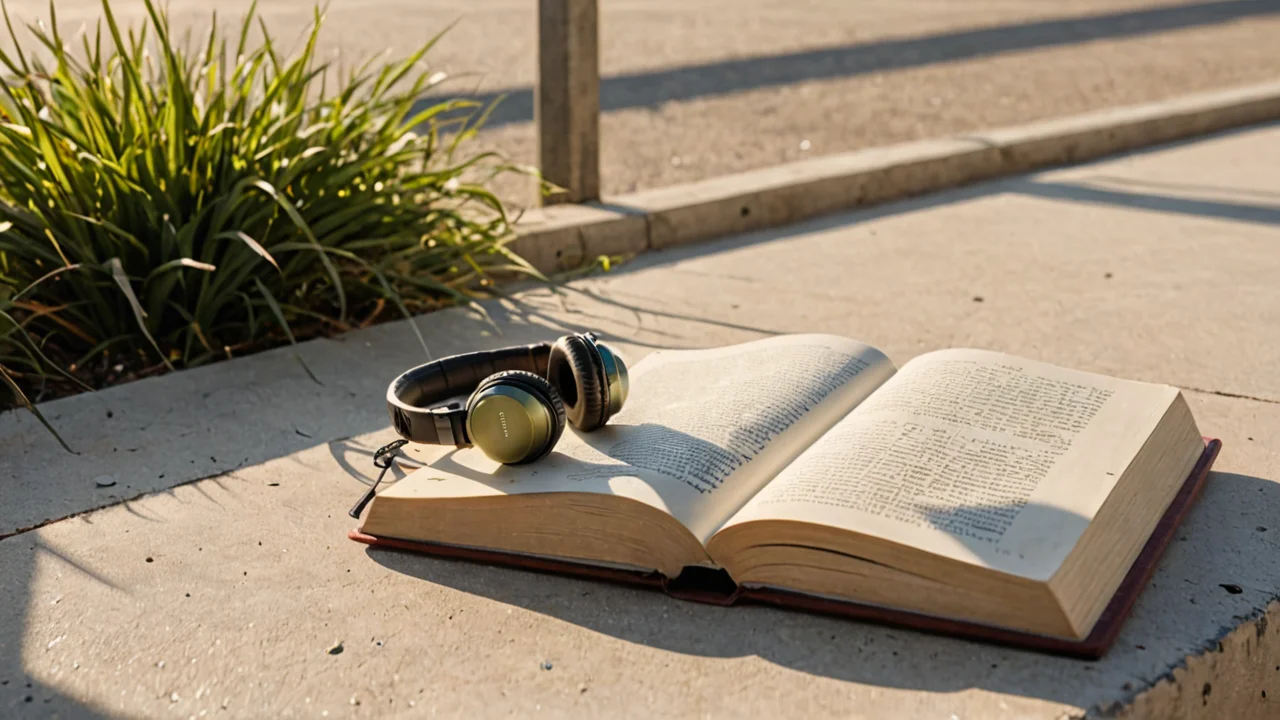
The best way to approach audiobook recommendations for 2025 is not by genre, but by understanding the consumption mechanism itself; mastering how your chosen service handles monthly allowances will determine if you can finish a long-form read without hitting a paywall.
Understand Your Listening Limits
For most casual listeners, the biggest surprise isn't the story—it's realizing that listening time is measured and finite. When selecting an audiobook to start, always first confirm your platform’s current monthly allotment, because these hours are not limitless.
Spotify operates using a system of allotted hours; specifically, certain Premium plans provide 15 hours of audiobook listening time per month from the Audiobooks Subscriber Catalog (as of 2033-10-03). This means that even if you purchase an audiobook that is 40 hours long, you will only have access to those first 15 hours until your next billing cycle. The key trade-off here is volume versus continuity: a few short stories are ideal for months with low allowances, while epic sagas require careful budgeting of listening time or the purchase of add-ons.
It is critical to remember that this monthly allowance expires entirely; unused audiobook listening time does not carry over or refund. If you buy a book requiring 15 hours and only listen for 10 hours, those remaining 5 hours are lost when your next billing period starts. This structural element means you must factor in planned breaks or slower reading months when selecting your title.
If the standard 15 hours is insufficient, Spotify offers Audiobooks+, which functions as a paid monthly add-on for eligible Premium plans. This mechanism allows users to purchase additional listening capacity beyond the base allowance, giving you more control over multi-month projects without having to buy individual top-up packages.
Maximize Your Streaming Options
When evaluating where to listen, you must determine if your primary need is convenience and integration (streaming) or ownership and permanence (downloads). Spotify currently dominates the integrated streaming audiobook experience for Premium users. However, other ecosystems treat audiobooks differently, which impacts how easily you can listen on various devices.
While the specific details regarding Apple Music's current audiobook catalog are not available in general terms, it is a common question that many listeners face: do other major players offer similar streaming capabilities? Generally speaking, platforms like Spotify integrate audiobooks into their core subscription model through the Audiobooks Subscriber Catalog. If you are looking for maximum cross-platform availability, check if your primary platform—such as Apple Music or Kindle—offers direct integration with the catalog details provided by Spotify.
For listeners who prefer to buy and own files rather than stream them via a monthly allowance, physical CD purchases or specific digital file downloads remain an option. These options sidestep the complex hourly counting system entirely but often lack the immediate accessibility of streaming platforms.
The best approach depends on your reading habits: if you listen inconsistently (e.g., 5 hours one month, 20 hours the next), a platform that sells top-up hours might be better than relying solely on the fixed monthly allotment. Conversely, if you have guaranteed consistent listening time, utilizing the base 15 hours provided by plans like Premium Individual or Premium Family is often sufficient.
Clarify the Definition of Audiobooks
A persistent question in the audiobook world asks: are audiobooks considered reading? The answer depends entirely on your definition. Technically, an audiobook is defined as a sound recording of a book or other work being read aloud, distributed in formats like digital audio files. From a literary standpoint, it is an interpretation of written text; from a skill-building perspective, however, it requires different cognitive engagement than reading print.
If your goal is to improve visual decoding skills or tactile engagement with typography, then listening does not count as reading in the traditional sense. If, however, your objective is simply content absorption—the ability to consume a narrative, learn history, or experience fiction—then audiobooks are absolutely equivalent to reading, offering the distinct benefit of multitasking capability.
This distinction is important because many consumers treat it as if the two activities are interchangeable. Understanding that an audiobook allows you to absorb material while performing other tasks (like driving or exercising) is its greatest appeal and its most significant trade-off from a dedicated reading perspective.
Navigate Subscription Tiers and Costs
Understanding how your service provider structures its pricing tiers is the single most important factor in preventing unexpected billing shock. Spotify’s structure clearly outlines which plans include audiobook listening time, and which do not—a crucial detail to note before signing up for a new service.
The plans that provide access to the base 15 hours of audiobook listening per month are Premium Individual, Premium Family (for plan managers only), and Premium Duo (for plan managers only). Conversely, it is important to remember that Premium Student does not include audiobook listening time. This difference means a student who relies on audiobooks must either budget for the full cost of the service or rely entirely on top-up hours.
Furthermore, while some plans include this base amount, you may still need to purchase additional capacity using Audiobooks+ if your listening habits exceed the 15 hours. The flexibility provided by these add-ons allows users to customize their access rather than being locked into a single bandwidth.
When calculating costs, factor in the validity period of top-up hours. These purchased audiobook listening hours are valid for 12 months from the purchase date, offering substantial long-term value compared to monthly allowances that expire at the end of each billing cycle.
Determine How You Can Listen
The mechanism of consumption—how you actually get the audiobook into your ears—varies based on the platform and whether you prioritize portability or immediate access. For most users, streaming via a dedicated app is the simplest method, but if you are trying to listen across multiple devices (e.g., an old Kindle vs. a new phone), you must confirm cross-compatibility.
A frequent question arises: can I listen to audiobooks on a Kindle? While Kindles are exceptional e-readers for visual reading, their audiobook functionality may be limited compared to dedicated streaming platforms. Similarly, while other services like Apple Music are frequently questioned regarding audiobook support, always verify that your desired content is housed within the specific Audiobooks Subscriber Catalog if you are relying on Spotify’s model.
The general process for listening is straightforward: through an eligible Premium plan, the service provides access to the catalog. You select a title, and the associated hours begin counting down from your 15-hour monthly allotment. If that number nears zero, you must either stop listening until the next month or purchase top-up hours.
Plan for Continuous Listening
Successful audiobook consumption requires foresight regarding depletion cycles. Because unused audiobook listening time expires at the end of each monthly billing period and cannot be carried over or refunded, planning ahead is essential to avoid stopping mid-story simply due to an administrative cutoff.
For extended journeys—say, finishing a 30-hour book in a month with only a 15-hour base allowance—the most cost-effective method is utilizing the top-up system. These purchased hours are valid for 12 months from the purchase date, offering predictable value over time. This mechanism allows you to bridge the gap between your monthly allotment and the length of the material.
If you anticipate a prolonged period of low usage (e.g., waiting for an income cycle or a family vacation), consider purchasing enough top-up hours to cover that anticipated deficit, knowing they will remain valid for 12 months. This provides a crucial safety net against the monthly expiry of unused time. Conversely, if your listening is sporadic and unpredictable month-to-month, relying solely on the included base 15 hours might be safer, as it prevents the accumulation of unrecoverable excess credit.
Ultimately, optimizing your audiobook experience means balancing the immediate convenience of streaming against the financial certainty provided by purchased top-up hours that last for a full year.
Budget a Single Long Book Across Billing Cycles
Start the month with a title you can finish inside the allowance, not one that runs past it. On Spotify, unused audiobook listening time expires at the end of each monthly billing period and cannot be carried over or refunded, so a book you abandon at the ninety-percent mark costs you the whole month's allowance and gets you nothing to show for it. If a title is clearly longer than what one cycle covers, do the arithmetic before you press play: the base allowance is 15 hours per month on Premium Individual, and Family and Duo plan managers get the same 15 hours, so a plan upgrade does not buy you a second stack of hours for the same account.
The workable sequence for a long book is to listen to the end of the allowance in one cycle, then finish in the next once the allowance resets. That costs you the waiting time between billing dates, and it is the wrong choice if you are reading for a deadline, a book club, or a class discussion that lands before your reset date. In that case, buy top-up hours instead of waiting, because purchased hours are valid for 12 months from the purchase date — a far better instrument for a book that straddles two months than the monthly allowance, which vanishes.
Two mistakes are easy to make here. First, people buy top-ups on the assumption that their leftover monthly hours roll forward; they do not. Second, people cancel a Premium plan mid-cycle expecting a prorated refund of unused listening time; there is nothing to refund, because the hours were never a balance. Watch for the moment the app stops playback and prompts an upgrade — that prompt, not a progress bar, is your real signal that the allowance is gone.
Match the Plan to the Listener Before You Subscribe
Check who actually holds the plan before you recommend a service to a household. Audiobook hours on Spotify come with Premium Individual, Premium Family, and Premium Duo — but on Family and Duo only the plan manager gets them. A family of four on a Family plan has one set of 15 hours, not four. That is the single most common mismatch I see: someone buys Family thinking each member gets a personal allowance, then discovers the teenagers are sharing one pool. Premium Student includes no audiobook listening time at all, so a student who wants audiobooks is looking at a different tier or a separate service entirely, and that changes the cost comparison against a dedicated audiobook subscription.
For a solo listener who reads consistently, the included 15 hours a month is usually the cheapest route, and the trade-off is that you are renting access rather than owning files. For a household with several heavy listeners, the shared-manager structure makes Spotify a poor fit for audiobooks, and buying individual titles — digital downloads or CDs — sidesteps the hourly accounting completely at the cost of convenience and, often, a higher per-book price. For the sporadic listener who goes weeks without pressing play, the monthly model quietly wastes money, because the allowance resets whether or not you used it; top-up hours valid for 12 months suit that pattern better, provided you remember they are a purchase, not a subscription.
The failure mode to listen for is a listener who tops up every month on top of a plan that already includes hours. If the top-ups are happening because the base allowance is genuinely too small, fine — but if they are happening because nobody checked which tier the account is on, you are paying twice for the same thing. Confirm the tier first, then decide whether to add hours.
Build a Queue That Fits the Reset Date
Line up your next title before the current one ends, and check its length against the days left in your billing period rather than against a full month. Fifteen hours sounds generous until you are eight days from reset with eleven hours of book left; at that point the sensible move is to switch to a shorter title and save the long one for a cycle you can start on day one. The allowance resets each month on the billing date, so a book begun mid-cycle inherits whatever fraction of the month remains, not a fresh fifteen hours.
Keep one short book in reserve specifically for the tail end of a cycle — a novella, an essay collection, a single-author short story volume. These finish in a sitting or two and stop you from either abandoning a long book at the ninety-percent mark or buying top-ups to rescue a deadline that only exists because you started late. The cost of this habit is mild: you read slightly out of the order you wanted, and series get interrupted. The benefit is that no allowance is ever stranded.
Watch for the queue problem specific to series. If book one consumes most of a cycle, book two starts the next one — fine. But if you finish book one with days to spare and immediately start book two, you can burn through the fresh allowance and hit the wall again mid-book two. The symptom is familiar: playback stops, an upgrade prompt appears, and you realize you have been treating the reset as a continuous tap.
Use Top-Ups as a Buffer, Not a Habit
Buy top-up hours when a specific long title needs them, not as a standing monthly charge alongside a plan that already includes an allowance. Purchased hours are valid for 12 months from the purchase date, which makes them genuinely useful as a reserve — buy once, draw down across several cycles, and let the monthly allowance handle the routine reading. The trap is the listener who adds hours every month because they never checked whether the base allowance was actually the constraint.
Before buying, do the diagnostic in order. Confirm the account tier, since Premium Student includes no audiobook listening time at all and no amount of topping up fixes a plan that never had hours to begin with. Then check whether this month's allowance is genuinely spent or whether a household member is drawing on the same pool — on Family and Duo, only the plan manager holds the hours, so a shared account can look depleted when it is simply shared. Only after both checks does a top-up make sense.
Remember the asymmetry that catches people: monthly hours expire at the end of the billing period and cannot be carried over or refunded, while purchased top-ups last 12 months. That means the correct order is always to exhaust the expiring hours first and treat the purchased ones as the long-lived buffer. Doing it the other way round — sitting on unused monthly time while spending top-ups — wastes the very hours you cannot keep.